A biotech research company building always-on AI scientists and studying how intelligence emerges in living matter.
Biology is the last great frontier of intelligence, and it is one we are barely learning to listen to. For centuries we have treated cells as chemistry. They are also decision-makers — solving problems together, in a language we are just beginning to read.
Eidosoma exists to build the collaborators that will help us read that language — and eventually, converse with it. A biotech research lab and an AI-scientist company, operating as one organism with two tissues.
We help R&D teams continuously integrate and scale AI across their research processes — from a single lab protocol to an organisation-wide research substrate. Under the hood, we orchestrate an ensemble of frontier models from OpenAI, Anthropic, and Google, using each where it is strongest across reasoning, coding, and synthesis. The deliverable is never a dashboard. It is a working AI scientist, owned by you, tuned to your questions.
Two-week embedded engagement. We map your research workflow, identify 3–5 high-leverage automation points, and ship a working prototype.
A bespoke AI scientist built from Eidosoma modules. Source code is your IP. Tuned to your domain, your data, your lab.
Monthly model updates, experiment telemetry, and on-call AI research engineers. Your scientist improves while you sleep.
Eidosoma Lab runs computational biological research 24 hours a day. Our AI scientists design, execute, and re-analyse thousands of experiments a week — feeding back into three interlocking research directions.
Cells talk to each other through many channels — chemical signalling, mechanical forces, and bioelectricity. Building on the work of Michael Levin and others, we model these signals as a substrate for distributed cognition — how a collection of cells 'decides' the shape of a limb, an organ, or a tumour.
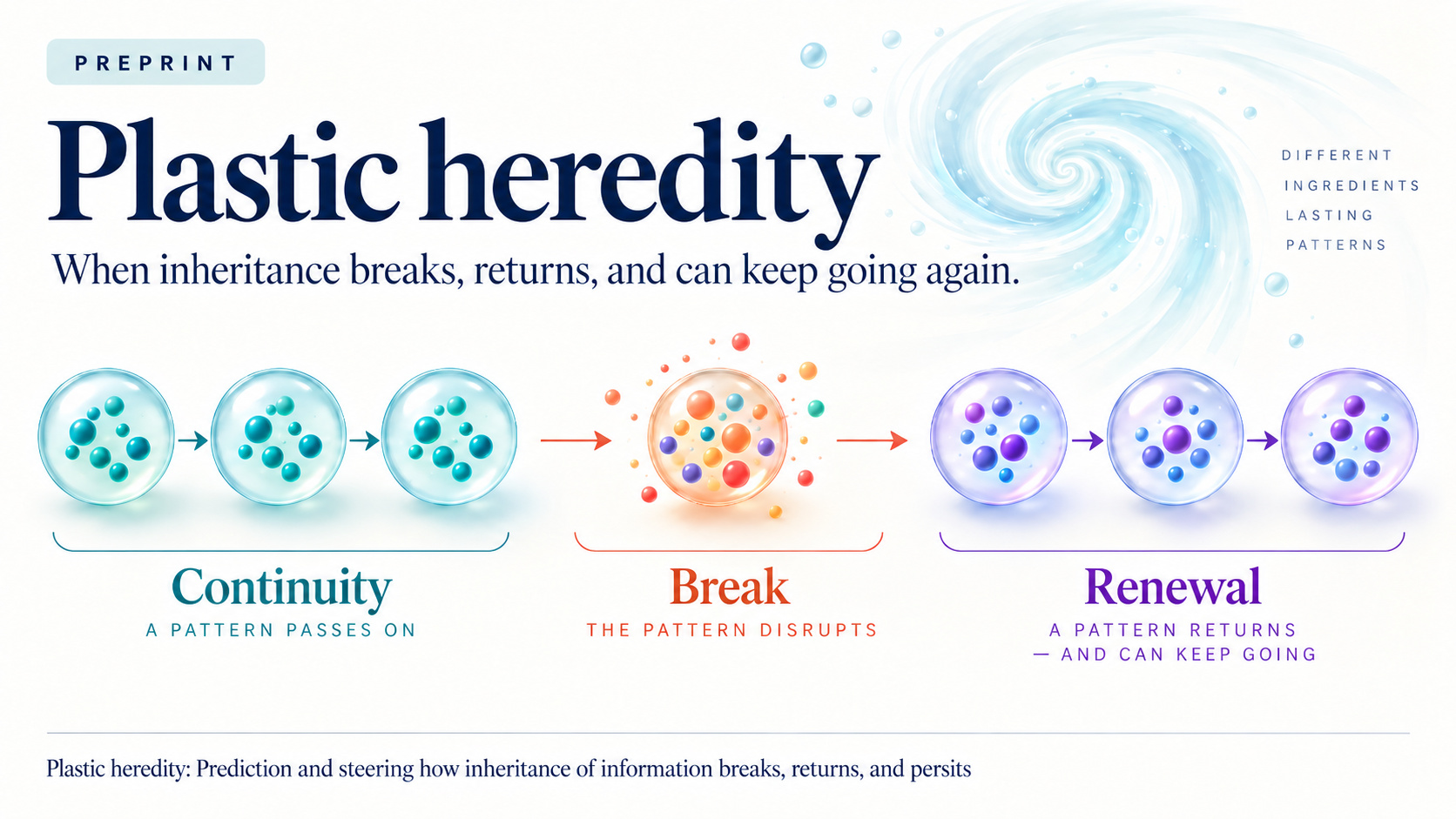
Regeneration, cancer, and aging are three modes of the same distribution — tissues losing, regaining, or drifting from the ability to agree on what they are. We search for bioelectric and molecular interventions that nudge a system back toward its target morphology.
We grow open-ended populations of simulated organisms, protocells, and neural substrates — testing how agency, memory, and morphology co-evolve, and what the strongest candidates can teach us about the origins of mind.
Eidosoma AI Scientists are always-on research agents that scale the work of the humans they work for. They read the literature for you, propose hypotheses, write and run hundreds of computational experiments in parallel, and surface the few that matter — letting a small team operate at the scale of a large one, without losing the agency, taste, or judgement of the scientists they serve.
Each Eidosoma AI Scientist is assembled from a set of composable modules — below are three of the core ones. Tap to unfold.
The CIP reads the internet the way a lab reads coffee: every morning, in large quantities. It crawls preprints, patents, GitHub commits, conference schedules, patient registries, and lab-notebook blogs — then filters, cross-references, and rewrites findings as context for your ongoing projects. Novelty, surprise, and contradiction are prioritised over volume.
The ECM decomposes a research question into runnable experiments, spawns a team of specialised AI coders, reviews their pull requests, and orchestrates execution on the cluster. It keeps a full experiment graph — every run, every parameter, every negative result — so that nothing is ever re-discovered by accident.
Good science rarely comes from climbing the steepest gradient. The Evolution Engine maintains a living archive of diverse candidates — models, protocols, organisms, hypotheses — and keeps exploring the space of what has not yet been tried. Underneath: MAP-Elites, novelty search, and open-ended divergence.

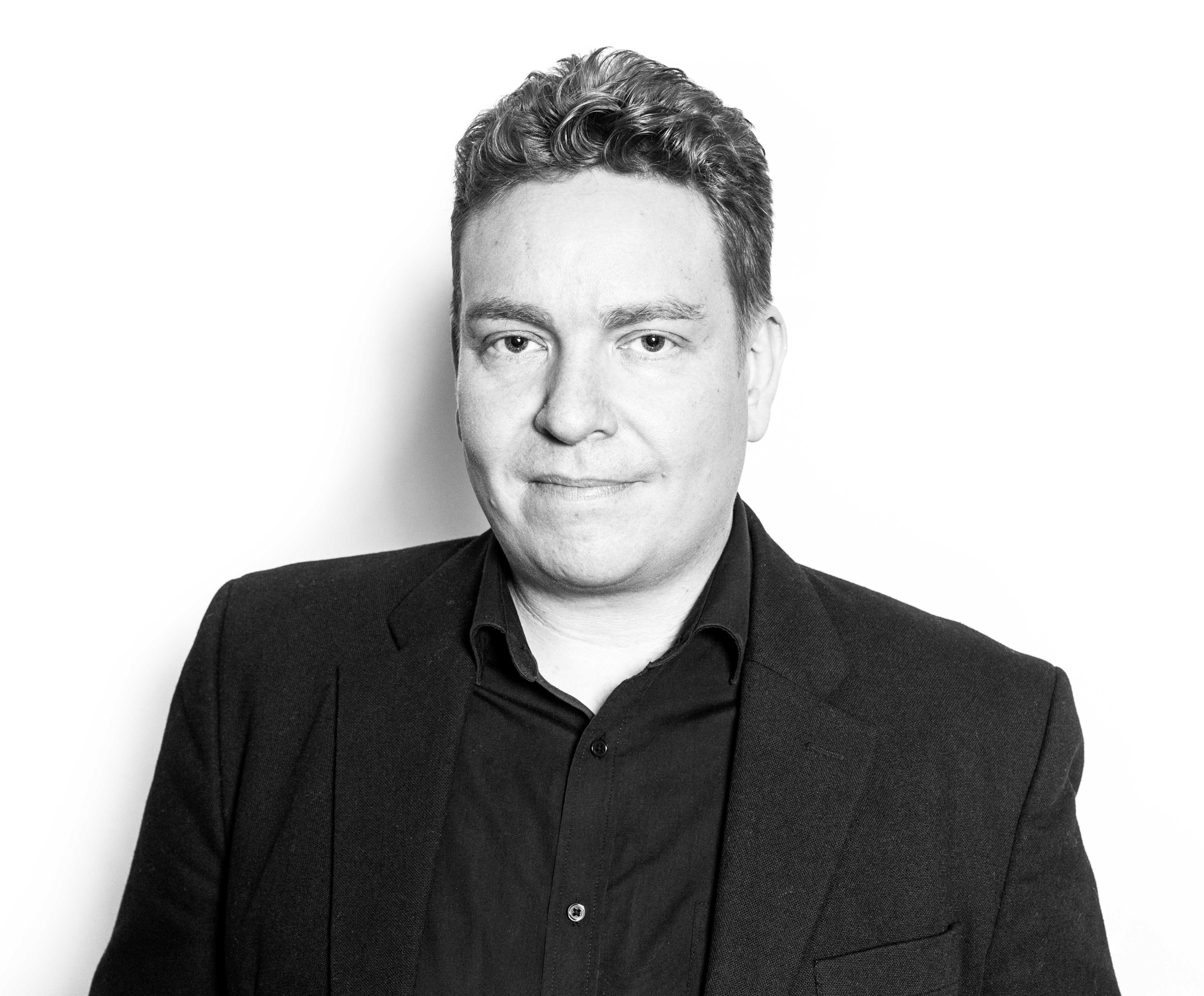
Robert has spent three decades at the intersection of AI, ALife, and collective intelligence — designing systems that help groups of humans, and now groups of cells, think better together. Eidosoma is his answer to a question he has been carrying for years: what would a biology laboratory look like if it were run by a collective mind that never slept?
We are planning initially to partner with a small number of labs and companies this year. Consulting engagements begin with a two-week discovery sprint.